
Climbing Palcoyo rainbow colored muntains
- Apr 24, 2020
- 4 min read
Updated: 3 hours ago
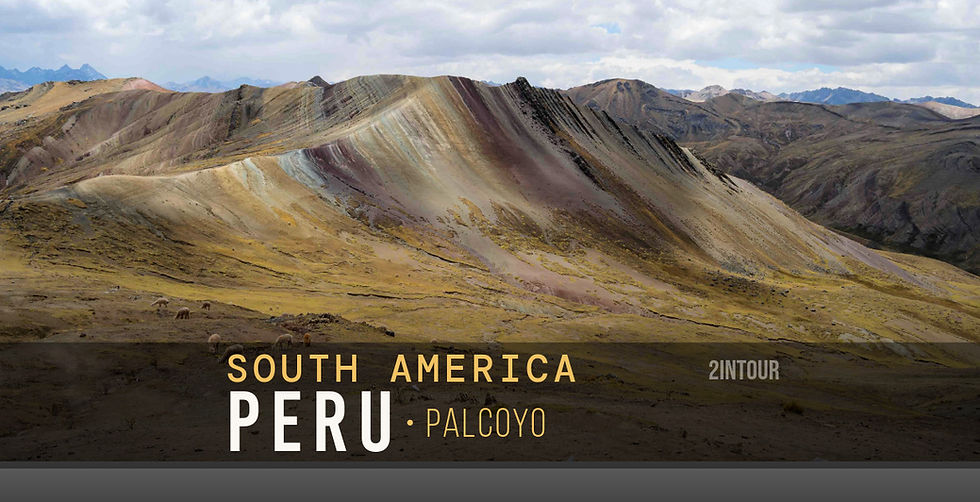
Looking for tips to plan your next trip to Southern Peru? In this article, we dive into a hidden gem: Palcoyo rainbow colored muntains. An incredible natural spectacle, far less crowded than Vinicunca, and accessible by car from Cusco.
"It always seems impossible until it's done" - N. Mandela
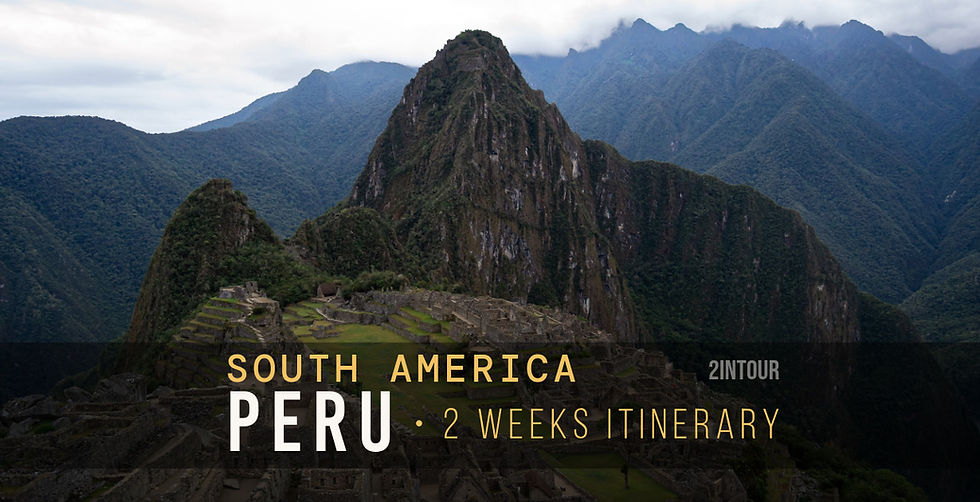
If you want more information, you might also be interested in our complete two-week itinerary, full of practical tips based on our firsthand experience, along with answers to frequently asked questions from other travelers.
Palcoyo rainbow colored muntains
We know… most of you are probably thinking: “Okay, you mean the Rainbow Mountains of Vinicunca.” No, it’s not a mistake. We really want to tell you about Palcoyo rainbow colored muntains, a stunning natural site that’s perhaps less well-known and still remarkably untouched by the mass tourism that surrounds Cusco.
First of all, this means you’ll likely be able to enjoy your breathtaking trek in complete peace - or in small groups - unlike the long lines of tourists at Vinicunca.
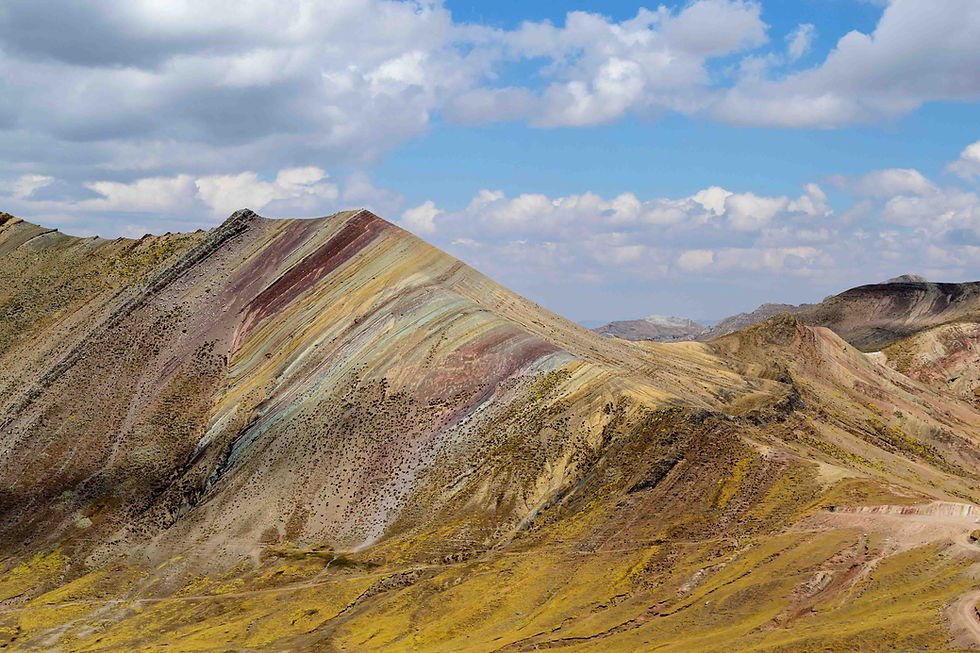
Second, Palcoyo doesn’t feature just one colorful mountain. Instead, it offers a series of layered sandstone mountains rich in iron and other minerals. Over time, oxidation has created the mountains’ vibrant stripes in shades of red, pink, yellow, green, and white.
Are you ready to take a walk with us?
How to Reach Palcoyo
Palcoyo is located in the Peruvian Andes, in the Checacupe district, about three and a half hours from Cusco.
While it’s possible to reach the mountain independently, we opted for a private tour with a local guide. The road to the Checacupe bridge is modern and wide, but beyond that point, it becomes a narrow dirt track with no signs, passing through small traditional villages with only a few houses.
The few people we pass watch our car with curiosity, and the children jump around to greet us. On the last stretch, a small hut confirms we’re near our destination, where we stop briefly to pay the entrance fee (only 10 soles per person). Not far from here, a herd of llamas blocks the road for a couple of minutes, and we wait patiently our turn to cover the final kilometer to the parking lot.
What to See at Palcoyo
Once at the parking lot, a panoramic viewpoint offers a stunning first view of Palcoyo rainbow colored mountains.
Despite the sun, it’s quite cold, and we’re glad to wear our technical clothing and warm hats. Some clouds race across the sky, so we delay the start of our trek slightly to capture photos of the sunlit mountains.
From here, a beautiful trail begins, revealing spectacular glimpses of a “rock forest” that temporarily hides the other colorful mountains. This is a series of pointed rock pinnacles shaped by erosion; wind, rain, and frost have gradually worn down the softer outer layers, leaving the tougher inner rock exposed.
The climb is probably one of the most thrilling experiences of our trip. Personally, we’ve rarely felt anything like it on other treks.
After a few steps, our breath shortens, and our hearts race—but at the same time, a new energy flows through our bodies. Passion, harmony with nature, curiosity, and sheer joy fill our veins, giving us the strength to move forward step by step… and Mother Nature (Pachamama, to the ancient Incas) rewards us with these breathtaking views.
Practical info:
When is it possible to visit Palcoyo?
The best period for planning a trek to Palcoyo is from April to November (the dry season). Due to the altitude (around 5,000 meters / 16,400 feet above sea level), even on sunny days the weather can be windy and change very quickly. We recommend bringing warm, technical clothing, even in summer, and don’t forget sunscreen!
How do you reach the trailhead?
The start of the trek is about a four-hour drive from the city of Cusco. The last stretch is a dirt road that climbs toward the mountains, and in some areas, the path is quite narrow. Consider renting a suitable vehicle (no buses, caravans, etc.) or joining a guided tour with an experienced local.
What is the difficulty level of this hike?
The trek itself is not complicated: it has no steep inclines and does not require specific training. There are several scenic viewpoints along the gentle trail, and in about an hour from the parking lot, you can reach one of the best viewpoints at a relaxed pace. That said, you will still feel the effort of climbing! Start the day in good physical condition and rest well the night before.
How to approach the trek?
The most important thing is to listen to your body: how we respond to altitude can vary from person to person. Staying hydrated is essential. It’s recommended to adjust your breathing to the trail conditions—inhale, hold your breath for 4–6 seconds, then exhale to improve oxygenation, and take breaks whenever you feel tired.
For mild altitude sickness, a traditional remedy is chewing coca leaves or, as we did, drinking Mate de Coca from a thermos. If this does not relieve symptoms, the only solution is to descend to lower altitudes (below 3,000 meters / 9,800 feet).
Are there medications that can help with altitude sickness?
Important: this is not a recommendation, just our personal experience. As always, before traveling abroad for an extended trip, we visit our regional travel medicine clinic (in Tuscany, Italy, here: https://www.vaccinarsintoscana.org/info-utili/ambulatori-medicina-viaggiatori) to understand how to prepare for the journey.
For this adventure, in agreement with our doctor, we decided to take DIAMOX. It caused no side effects, and we did not experience altitude sickness. Once again, we are not suggesting you do the same—always consult a doctor before taking any medication.
*Altitude Sickness or Acute Mountain Sickness (AMS) is the negative health effect of high altitude caused by a rapid exposure to low amounts of oxygen at high elevation. Most common symptoms may include headaches, vomiting, tiredness, trouble sleeping, and dizziness.
To discover more about these place, have a look to our posts and stories dedicated to Peru dated August/September 2019 on our Instagram page @2intour

Comments