
One day in Arequipa: the white city
- Apr 12, 2020
- 4 min read
Updated: 7 hours ago
Looking for Tips to Plan Your Next Trip to Southern Peru? n this article, we dive into the colorful colonial city of Arequipa - a highlight of our road trip through Southern Peru, exploring the city’s most charming corners framed by majestic volcanoes and rich history.
"Learning never exhausts the mind". Leonardo da Vinci
If you want more details, you might also be interested in our complete two-week itinerary, packed with practical tips based on our firsthand experience and answers to the most frequently asked questions from fellow travelers.
The White City of Arequipa
Arequipa is Peru’s second-largest city, yet it has a completely different charm from the hectic, modern vibes of Lima. As the vibrant heart of the region of the same name, Arequipa sits at around 2300 meters above sea level, surrounded by breathtaking landscapes.
The surrounding region is defined by some of the tallest volcanoes in the southern Andes, interspersed with high plains, deep canyons, and fertile valleys.
It is this unique geology that has shaped the city: Arequipa is largely built from sillar, a white volcanic stone that gives it a luminous, distinctive charm, earning it the nickname “the White City”.
But the choice of this stone was about more than aesthetics. First, it is remarkably durable—a key feature in an area prone to earthquakes. Second, it is breathable, helping homes stay cool during hot summer days. This perfect blend of beauty and practicality has allowed Arequipa to preserve its charm for centuries.
The Historic Center of Arequipa
Arequipa’s historic center is a true architectural and cultural gem, retaining the splendor of its Spanish colonial past.
Walking along its cobblestone streets, every corner tells a story: from grand Baroque churches to the quiet courtyards of convents, to colonial mansions reflecting the light of the white stone.
We start our visit early in the morning at the bustling Plaza de Armas, one of Peru’s most elegant squares, lined with arcades, a manicured garden, cozy cafés, and the majestic Arequipa Cathedral directly opposite. Built in the 16th century and rebuilt multiple times due to frequent earthquakes, the cathedral impresses with its towering spires and intricately carved stone facades.
After a quick look inside, we stroll around the square to soak up local life: street vendors selling drinks and snacks, children playing soccer, and women in colorful traditional dresses carrying handmade crafts in jute sacks. The plaza is full of photographic opportunities, but we head to the Monastery of Santa Catalina, just a few minutes away, aiming to explore before the organized tours arrive.
Monastery of Santa Catalina
One of the city’s most fascinating and iconic sites is undoubtedly the Monastery of Santa Catalina - practically a city within a city.
Founded in 1579, the convent spreads across a vast area, making it one of the largest in South America, complete with internal streets, plazas, courtyards, and colorful houses. Walking through its walls feels like stepping back in time: every corner tells stories of nuns, devotion, and daily life in the colonial era. The monastery became a refuge for noblewomen wishing to devote themselves to religious life without giving up their social status, just like Doña María de Guzmán - a wealthy, childless local noblewoman who retired to the convent in 1579, becoming its first inhabitant and abbess.
For over four centuries, Santa Catalina remained one of Peru’s most important centers of devotion.
We recommend dedicating at least 2–3 hours to visit the monastery at a leisurely pace. Comfortable walking shoes are a must, as the complex spans over 20,000 square meters. Entry is ticketed, with the option of self-guided audio tours or guided tours.
The visit is designed to allow visitors to explore freely, without following a fixed route. You’ll see the nuns’ living quarters, workshops, kitchens, and numerous communal spaces.
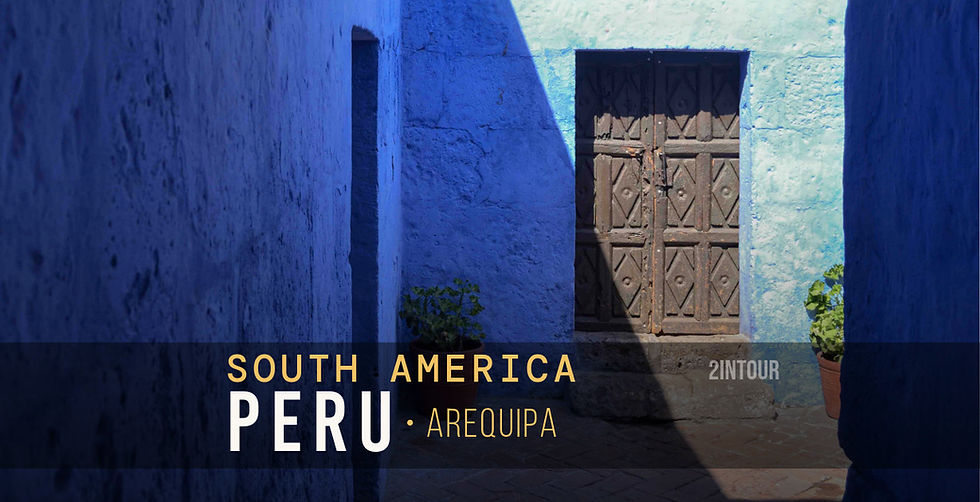
What struck us most were the colorful red, blue, and orange facades along the internal streets, creating a lively contrast with the white stone of Arequipa’s city center.
Among the many inscriptions on the walls, one engraved on an arch stands out, urging silence. This simple yet powerful message served as a reminder to the nuns of the importance of contemplation and meditation—a guiding spiritual principle in a place where life revolved around prayer, manual work, and inner reflection.
Yanahuara Viewpoint
We end our day in Arequipa at the Yanahuara Viewpoint (Mirador Yanahuara), just a few minutes by car from the historic center.
This is one of the city’s most famous lookout points, offering breathtaking views of the Misti, Chachani, and Pichu Pichu volcanoes that arc around the city, as well as the sunlit rooftops and sillar facades of Arequipa.
The viewpoint is also renowned for its white stone arcades adorned with traditional motifs, perfect for unforgettable photos.
From here, we continue our journey by car toward our next destination: the Colca Canyon.
FREQUENLY ASKED QUESTIONS
What does Arequipa mean?
The name Arequipa may come from the combination of two ancient Aymara words: “ari”, meaning “to gather” or “to take,” and “quipa”, meaning “place behind” or simply “behind.” The exact etymology is still debated among scholars, but this interpretation hints at the deep connection between the city and the indigenous peoples who lived in the region long before the arrival of the Spanish
Why is Arequipa called the White City?
The nickname comes from the widespread use of a pale volcanic stone called sillar as a building material. This stone gives the façades of the city’s churches, palaces, and colonial houses their characteristic white color
What are the main monuments to visit in Arequipa’s historic center?
The must-see sites in the historic center include Plaza de Armas, Arequipa Cathedral, the Monastery of Santa Catalina, and the historic buildings along Calle Mercaderes.
Do I need to book tickets for the Monastery of Santa Catalina in advance?
No, tickets can be purchased directly at the entrance. However, the monastery is one of the city’s most visited sites and is included in nearly every tour of Arequipa, so it’s best to arrive early in the morning to explore before the crowds.
Is Arequipa’s historic center a UNESCO World Heritage Site?
Yes, Arequipa’s historic center was declared a UNESCO World Heritage Site in 2000, recognized for its typical colonial architecture made from sillar stone
If you enjoyed this article and want more information about our stops in Peru, check out the other blog posts about this journey and browse our Peru-focused posts and stories on our Instagram page @2intour


Comments